

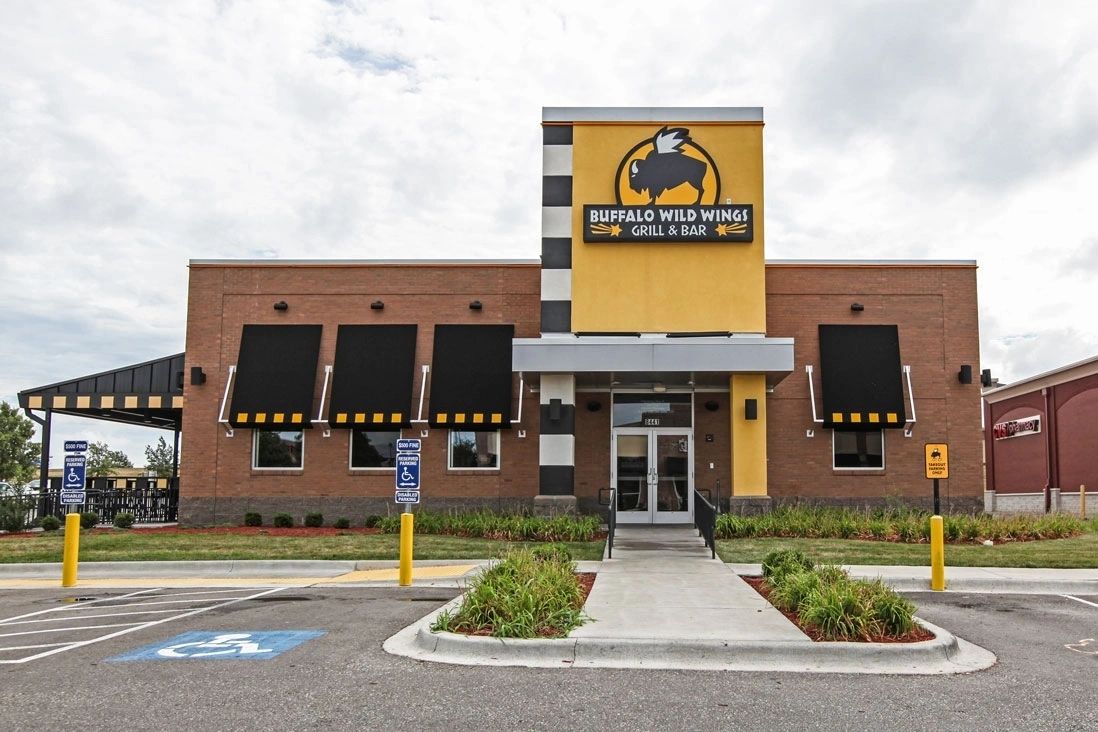
The base band that finishes a building
A stone wainscot under siding, stucco or storefront glass is the most common thing we sell. It is also the easiest exterior stone job to measure.
Stone Veneer Foundations and Wainscots
Look at the commercial buildings on our projects page and most of them have the same detail: a band of stone from grade to 3 or 4 feet, with siding, stucco or glass above. On a house it is the exposed foundation, the garage front or a wainscot under lap siding. It uses a modest amount of stone, it is at eye level, and it makes a plain elevation look built rather than wrapped.
Measuring a wainscot
Multiply the length of the wall by the height of the band, subtract nothing for windows unless the band runs over them, add 10 percent, and order the total as flats. Every outside corner is measured top to bottom and ordered as corners by the linear foot. A 40-foot front with a 3-foot band is 120 square feet of flats plus 6 linear feet of corners for two corners, which is above our 100-square-foot minimum on its own.
Profiles for a base band
Low, horizontal profiles suit a band. Ledge and Southern Ledge stretch the wall visually with long, low pieces. Tumbled with a mortar joint suits stucco above. On a commercial storefront, 3" Strip Ledge or Dimensional keep the band crisp under aluminum and glass. Darker colors such as Charcoal, Dark Night and Huron hide splash-back at grade.
Foundation details
Keep the bottom of the stone 4 inches above grade or 2 inches above a sidewalk or drive, and start on a weep screed. Cap the top of the band with a sill, a drip cap or a flashing so water sheds off the stone rather than behind it. Over a poured or block foundation, a scratch coat goes straight on the concrete after a bonding agent; over framing, use a weather barrier and lath. Below-grade stone is not a veneer job; stop at the screed.
Order and pick up
Made to order in Lenexa, usually ready in 2 to 4 weeks. Most base bands fit on one pallet and go home in a pickup or a trailer; if you cannot pick up, we arrange freight and you pay the carrier. Questions about a house go to Ben, about a building to Steve, both at 913-345-8888.
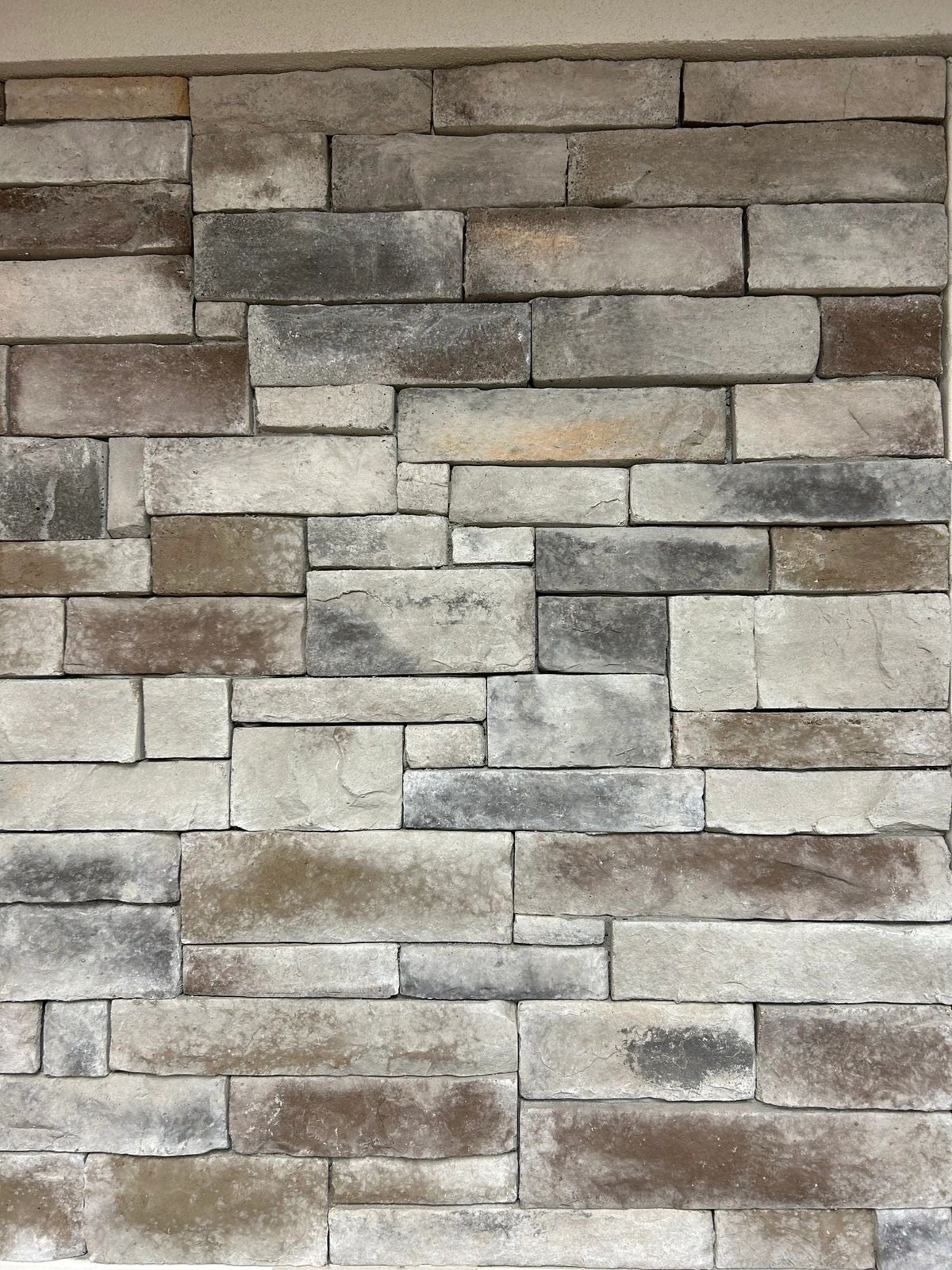
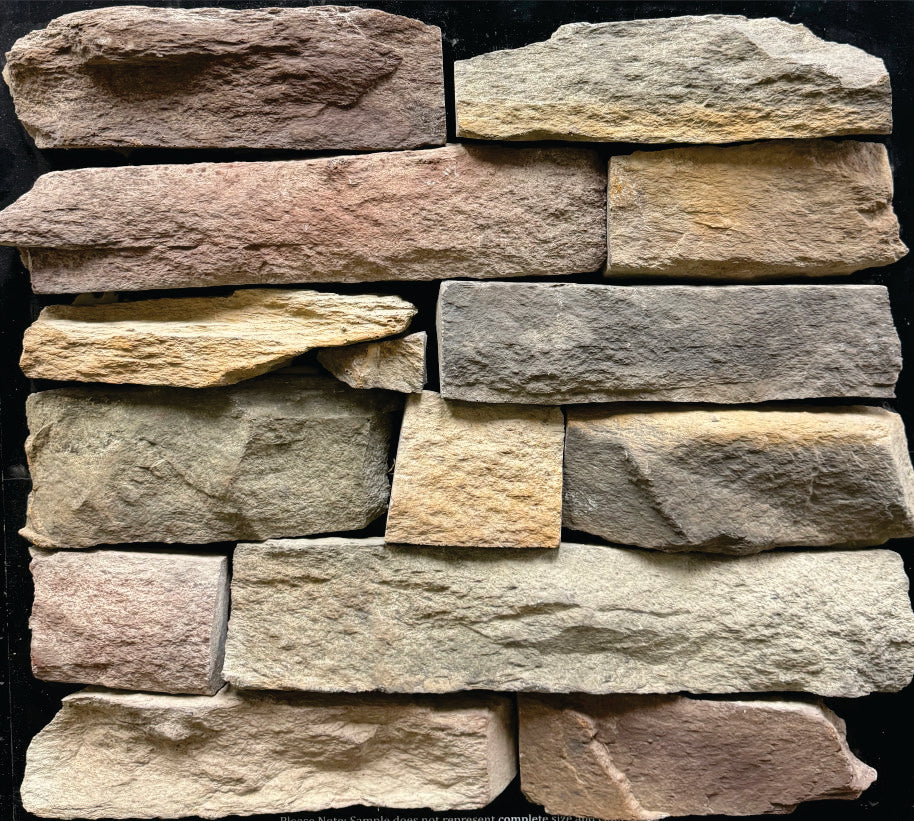
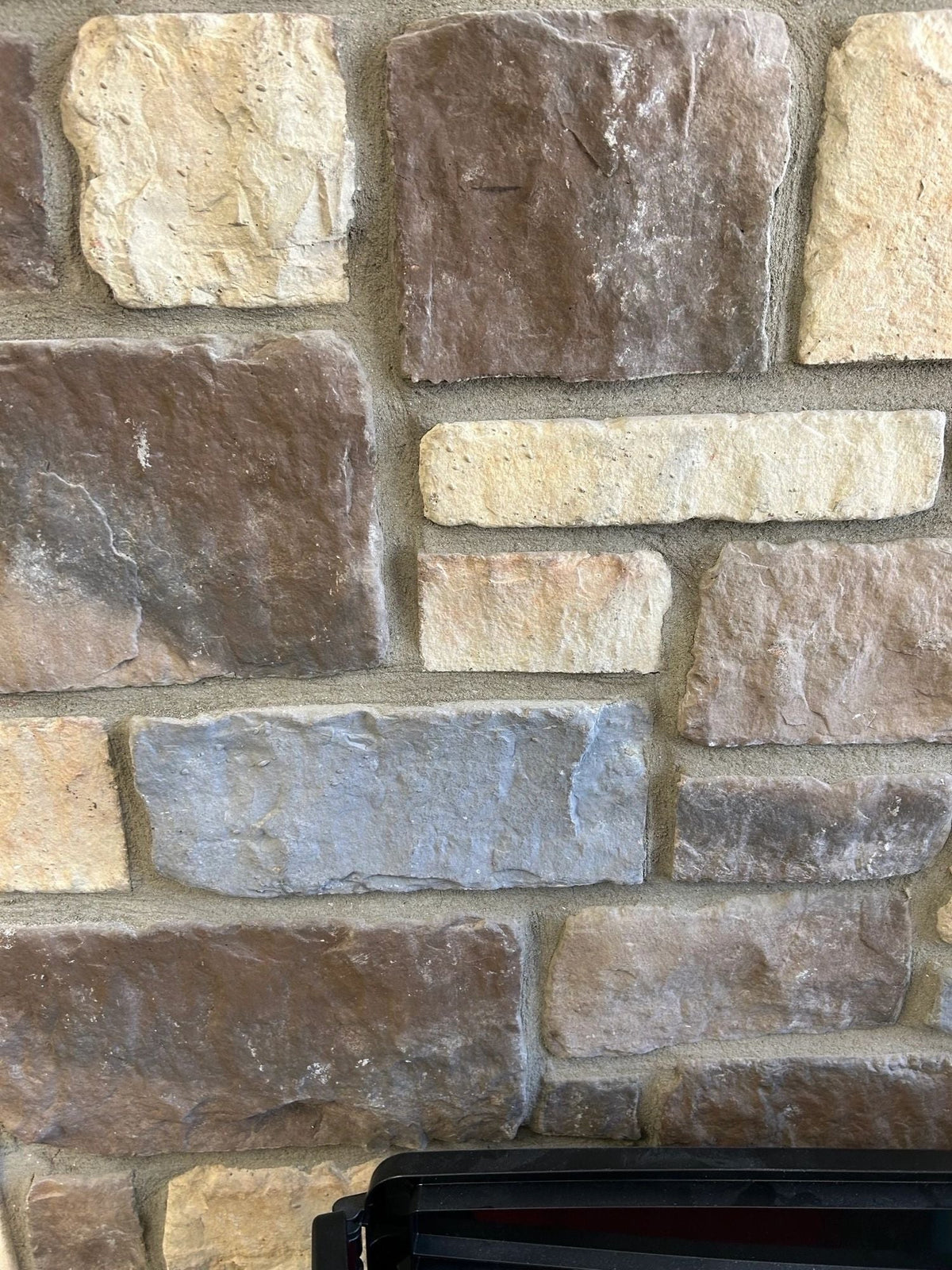
Installed
Restaurant wainscot
Stone band with columns

Restaurant base
Stone base under a modern facade

Bank branch
Stone base and columns

Mixed-use building
Thin brick and stone base

Dunkin' Donuts
Tan stone base and pillars

District 39 apartments
Cut stone base under thin brick
Questions people ask
Can I cover an exposed concrete foundation with stone veneer?
Yes, that is one of the most common uses. Clean the concrete, apply a scratch coat with a bonding agent, and set the stone. Stop 4 inches above grade.
What goes on top of a stone wainscot?
A sill or a cap that projects past the face of the stone with a drip, or a flashing tucked behind the siding above. Without it water runs behind the stone.
How high should a wainscot be?
Most run 30 to 42 inches, to a window sill line or a horizontal trim board. Commercial bands often follow the bottom of the storefront glass.
Does a base band need corners?
At every outside corner, yes. Measure the height of the band at each corner and add them up for linear feet of corners. Inside corners are cut from flats.
How much stone does a typical house wainscot take?
Between 100 and 300 square feet depending on how many elevations. Our calculator on each color page converts wall length and height into flats and corners.
Talk to a person at the plant
Ben answers homeowner questions, Steve handles commercial projects. Call 913-345-8888, Monday through Friday, or send the wall size and we call you back.